Week 8: Who wins and who loses in a war on poverty?

DVST 6901: The global politics of development (Semester 2, 2026)
September 21, 2026

Development policy and practice will inevitably lead to a clash between cultures and distinct ways of imagining the individual’s place in a larger social order. For this reason intervention leads to unintended consequences.

Main reading: Ansell (2014), intro. and chaps. 4-5

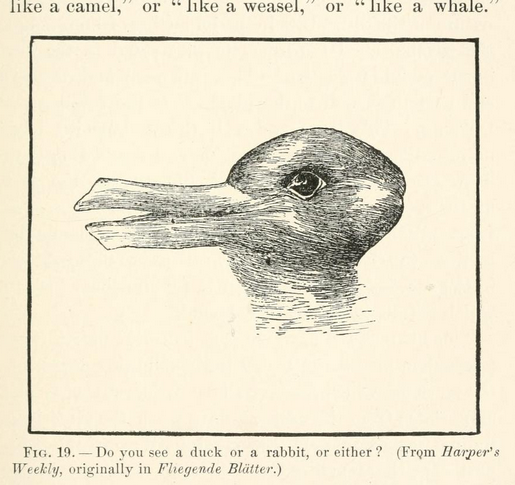
What do you see?

Joseph Jastrow (1901) used the popular image of a “duck-rabbit” to demonstrate that one’s mind supplies a frame to interpret visual stimuli (p. 295). Whether you see a duck or a rabbit depends on what you project onto the image, and one can switch from one frame to another. There is no way to view the image objectively.

Mentimeter poll results

What’s the connection?

Is it corruption?

Are these relationships deviations?

What are the consequences of these kinds of relationships, especially for the issues we discuss in this class?

What is a topic?

A topic is like the setting of the story.

It has a

What is a possible topic that could shed light on “intimate hierarchy”?

Notes

Keywords

intimate hierarchies, nostalgia

Learning outcomes

References

Ansell, Aaron. 2014. Zero Hunger: Political Culture and Antipoverty Policy in Northeast Brazil. Durham, N.C.: University of North Carolina Press.
Jastrow, Joseph. 1901. Fact and Fable in Psychology. London: Macmillan. https://archive.org/details/factfableinpsych01jast/page/294/mode/2up?q=%22Do+you+see+a+duck%2C+or+a+rabbit%22.